

Cindy's Story
Multiple Myeloma
Cindy lives in Northern California and enjoys walking along the riverfront and spending time with her family. After losing her mother to cancer and learning that she herself has a BRCA gene mutation, Cindy became more aware of her own cancer risks. Still, she felt fine and had no reason to expect that cancer would impact her life anytime soon.
Her Galleri Test Experience
Cindy’s OBGYN, Dr. Candace Westgate, knew about Cindy’s elevated cancer risk and recommended the Galleri multi-cancer early detection test for her. “I am passionate about cancer prevention and early detection,” said Dr. Westgate. “The amazing opportunity that we have here to screen one individual for multiple cancers with something as simple as a blood draw” left her “mind blown.”
“I have to admit, I was a little reticent, because no one wants to find out they have cancer,” Cindy recalled.
Test Results and Early Detection
The Galleri test showed a cancer signal detected with a predicted origin of plasma cell lineage. Follow-up evaluation confirmed multiple myeloma, a blood cancer involving abnormal plasma cells in the bone marrow. Because it was caught so early, she was able to begin treatment before developing serious complications.
“Cindy was actually quite asymptomatic,” said Dr. Tyler Kang, Cindy’s oncologist at Adventist Health. “We were able to pick up her diagnosis before she developed any symptoms of myeloma.”
Cindy has since responded well to therapy and entered remission. She is grateful that Galleri gave her the chance to act quickly.
“If somebody was hesitant about taking the test, I think the first thing I would tell them is, it’s so simple, it’s just a blood test. If it comes back and there’s nothing there, great, lucky you. But if it comes back and there is a signal, well, you can jump on it,” Cindy said.
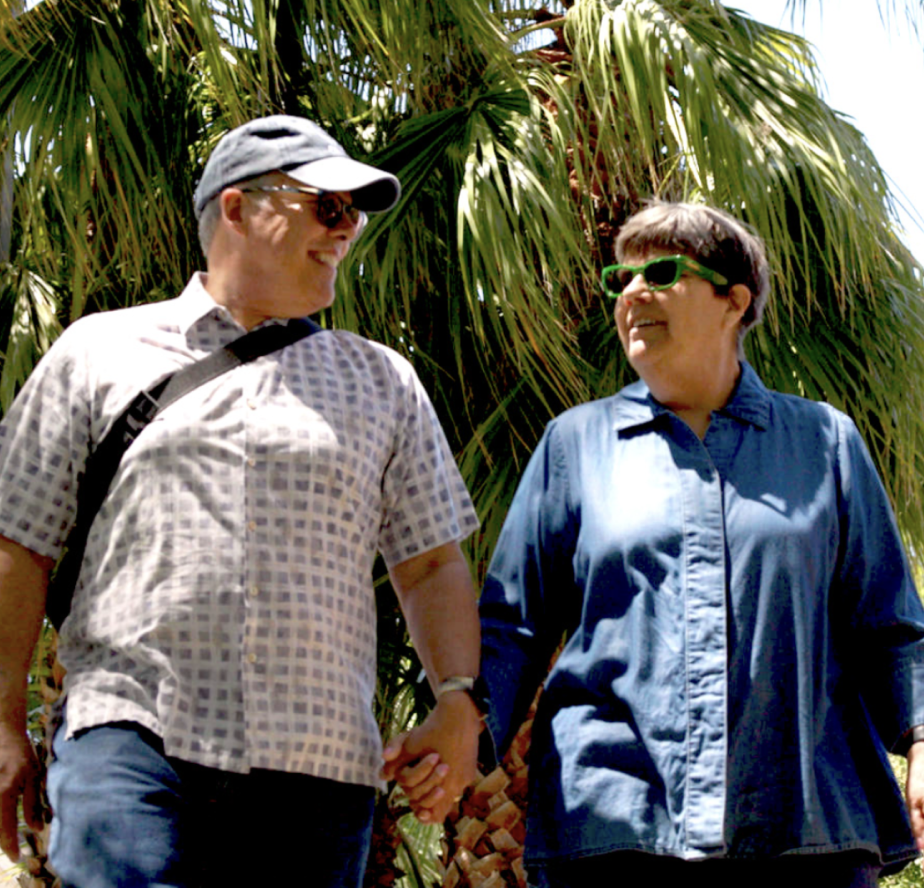
“I wish that something like the Galleri test had been available, say for my mom who had lung cancer.”
The Galleri test does not detect a signal for all cancers and not all cancers can be detected in the blood. False-positive and false-negative results do occur. Galleri is a screening test and does not diagnose cancer. Diagnostic testing is needed to confirm cancer. The Galleri test should be used in addition to healthcare provider recommended screening tests.
The overall sensitivity in study participants with plasma cell neoplasm was 72.3% (64.7% for stage I, 87.5% stage II, 64.3% stage III).
Important Safety Information
The Galleri test is recommended for use in adults with an elevated risk for cancer, such as those age 50 or older. The test does not detect all cancers and should be used in addition to routine cancer screening tests recommended by a healthcare provider. The Galleri test is intended to detect cancer signals and predict where in the body the cancer signal is located. Use of the test is not recommended in individuals who are pregnant, 21 years old or younger, or undergoing active cancer treatment. Results should be interpreted by a healthcare provider in the context of medical history, clinical signs and symptoms. A test result of No Cancer Signal Detected does not rule out cancer. A test result of Cancer Signal Detected requires confirmatory diagnostic evaluation by medically established procedures (e.g. imaging) to confirm cancer. If cancer is not confirmed with further testing, it could mean that cancer is not present or testing was insufficient to detect cancer, including due to the cancer being located in a different part of the body. False positive (a cancer signal detected when cancer is not present) and false negative (a cancer signal not detected when cancer is present) test results do occur. Rx only.
Laboratory/test information
The GRAIL clinical laboratory is certified under the Clinical Laboratory Improvement Amendments of 1988 (CLIA) and accredited by the College of American Pathologists. The Galleri test was developed—and its performance characteristics were determined—by GRAIL. The Galleri test has not been cleared or approved by the Food and Drug Administration. The GRAIL clinical laboratory is regulated under CLIA to perform high-complexity testing. The Galleri test is intended for clinical purposes.