
The Stories
What happens when cancer is detected before symptoms appear? These stories offer a window into that question—featuring individuals who took a proactive step with screening and discovered something they may not have found until it was too late. Their experiences illustrate the real-world impact of early cancer detection.
Ann, Colorectal Cancer
Ann signed up for the NHS-Galleri trial with the intention of helping others. In fact, it ended up helping her.


Robert, Head and Neck Cancer
Robert joined the NHS-Galleri trial in honor of his parents, who both died from cancer. He wanted to help advance cancer research — he didn’t expect to receive a Cancer Signal Detected result.
Darla, Pancreatic Cancer
Darla accepted her insurance company’s offer to take the Galleri test, which yielded a Cancer Signal Detected result with a Cancer Signal Origin of pancreas.


Kevin, Esophageal Cancer
Kevin, a healthy, fit firefighter of 30 years, took the Galleri test when it was offered as a proactive measure by his fire department.
Valerie, Gallbladder Cancer
In an effort to stay on top of her health, Valerie took the Galleri test and was shocked to receive a Cancer Signal Detected result.


Jack, Head and Neck Cancer
Jack’s family did not have a history of cancer, while his wife’s did – so neither thought he was likely to receive a Cancer Signal Detected result from the Galleri test.
Roger, Pancreatic Cancer


Cindy, Lymphoma
As her husband was recovering from cancer, Cindy decided to take the Galleri test in an effort to be proactive about her own health.
Dave, Lymphoma
Dave felt like he was in picture-perfect health, but the Galleri test revealed a Cancer Signal Detected result that led to a diagnosis of a rare form of blood cancer.


Cindy, Multiple Myeloma
Cindy’s risk of cancer was higher than average—she lost her mother to lung cancer and carries a BRCA gene mutation—leading her OBGYN to recommend the Galleri test in addition to recommended screening.
Rich, Lung Cancer
Rich and his wife Staci took the Galleri test, and though she had the family history of cancer, Rich’s test returned a Cancer Signal Detected result for lung cancer.

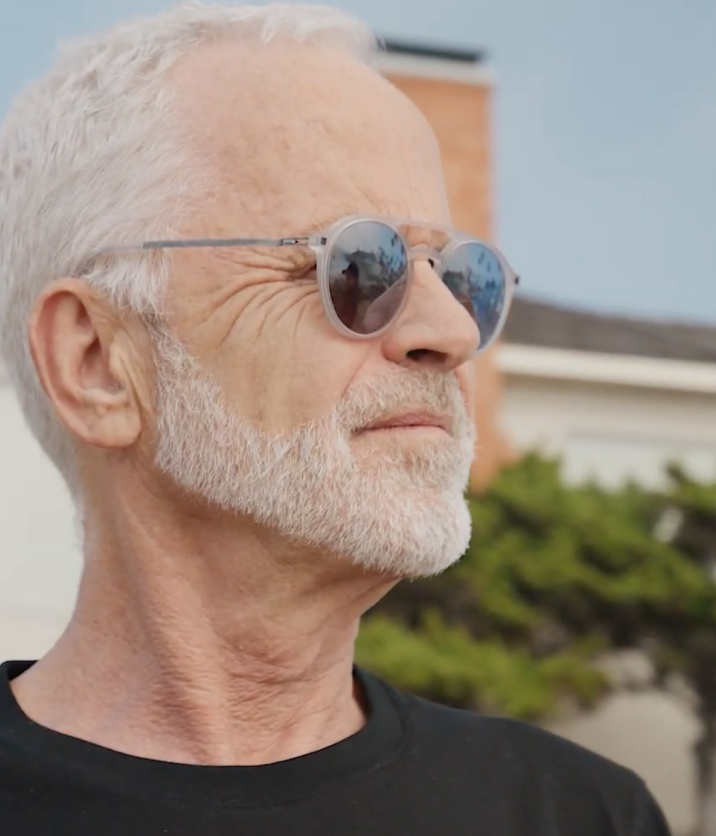
Jonathan, Lymphoma
Jonathan took the Galleri test at the recommendation of his doctor to stay on top of his health, and was shocked to receive a Cancer Signal Detected result for lymphoma with a lymphoid lineage predicted origin.
The Galleri test does not detect a signal for all cancers, and not all cancers can be detected in the blood. False-positive and false-negative results do occur. Galleri is a screening test and does not diagnose cancer. Diagnostic testing is needed to confirm cancer. The Galleri test should be used in addition to healthcare provider recommended screening tests.
Based on a clinical study of people ages 50 to 79 around 1% are expected to receive a cancer signal detected result which includes predicted cancer signal origins. After diagnostic evaluation, around 40% of these people are expected to have a confirmed cancer diagnosis.
The overall sensitivity in study participants with colon/rectal cancer was 82.0% (43.3% for stage I, 85.0% stage II, 87.9% stage III, 95.3% stage IV).
The overall sensitivity in study participants with esophageal cancer was 85.0% (12.5% for stage I, 64.7% stage II, 94.1% stage III, 100% stage IV).
The overall sensitivity in study participants with gallbladder cancer was 70.6% (0% for stage I, 33.3% stage II, 75.0% stage III, 100% stage IV).
The overall sensitivity in study participants with head and neck cancer was 85.7% (63.2% for stage I, 82.4% stage II, 84.2% stage III, 96.0% stage IV).
The overall sensitivity in study participants with lung cancer was 74.8% (21.9% for stage I, 79.5% stage II, 90.7% stage III, 95.2% stage IV).
The overall sensitivity in study participants with lymphoma was 56.3% (27.3% for stage I, 58.3% stage II, 71.7% stage III, 60.9% stage IV).
The overall sensitivity in study participants with pancreatic cancer was 83.7% (61.9% for stage I, 60.0% stage II, 85.7% stage III, 95.9% stage IV).
The overall sensitivity in study participants with plasma cell neoplasm was 72.3% (64.7% for stage I, 87.5% stage II, 64.3% stage III).
Important Safety Information
The Galleri test is recommended for use in adults with an elevated risk for cancer, such as those age 50 or older. The test does not detect all cancers and should be used in addition to routine cancer screening tests recommended by a healthcare provider. The Galleri test is intended to detect cancer signals and predict where in the body the cancer signal is located. Use of the test is not recommended in individuals who are pregnant, 21 years old or younger, or undergoing active cancer treatment. Results should be interpreted by a healthcare provider in the context of medical history, clinical signs and symptoms. A test result of No Cancer Signal Detected does not rule out cancer. A test result of Cancer Signal Detected requires confirmatory diagnostic evaluation by medically established procedures (e.g. imaging) to confirm cancer. If cancer is not confirmed with further testing, it could mean that cancer is not present or testing was insufficient to detect cancer, including due to the cancer being located in a different part of the body. False positive (a cancer signal detected when cancer is not present) and false negative (a cancer signal not detected when cancer is present) test results do occur. Rx only.
Laboratory/test information
The GRAIL clinical laboratory is certified under the Clinical Laboratory Improvement Amendments of 1988 (CLIA) and accredited by the College of American Pathologists. The Galleri test was developed—and its performance characteristics were determined—by GRAIL. The Galleri test has not been cleared or approved by the Food and Drug Administration. The GRAIL clinical laboratory is regulated under CLIA to perform high-complexity testing. The Galleri test is intended for clinical purposes.