
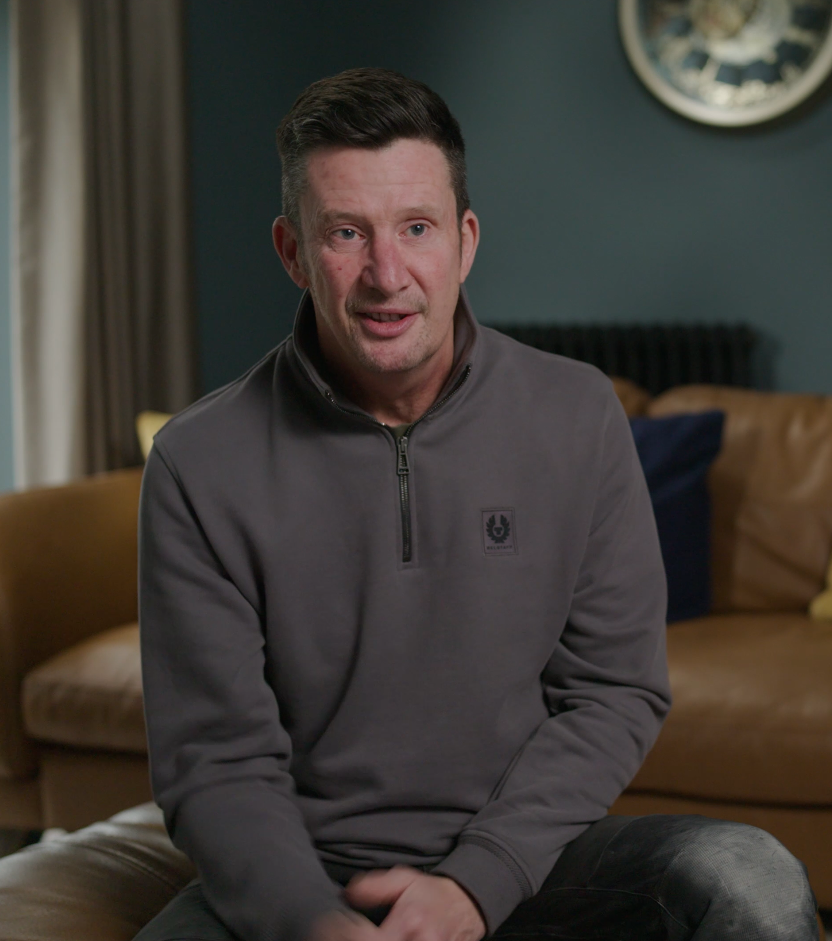
Robert's Story
Head and Neck Cancer
Robert enrolled in the NHS-Galleri trial at the age of 55. He’d lost both of his parents to cancer and saw the chance to help advance cancer research. “It was just a blood test – quick and easy. It was a no brainer for me to join the trial,” he says.
His Galleri Test Experience
After his first blood test appointment, no results were reported back to him. But after his second blood test appointment a year later, Robert received a call to inform him that the test had detected a cancer signal. “I wasn’t worried,” he says. “I felt fit, had no symptoms at all.”
After scans and biopsies showed no evidence of cancer, he put it out of his mind. Life continued as normal for Robert, who works as a carpenter for a kitchen company and who is married with two grown-up children.
He attended a third blood test appointment the following year, which yet again gave a Cancer Signal Detected result with a head and neck Cancer Signal Origin. Doctors carried out a second panendoscopy, a camera procedure under anaesthetic with tissue samples. The result was remarkable: a squamous cell carcinoma at the base of his tongue, staged as Stage I. It was detected before any symptoms appeared. “I was shell shocked. I’d gone from feeling great to being told I had cancer, but am grateful it was caught before it became more serious.”
Robert began treatment in January 2025, a combination of radiotherapy and chemotherapy. Treatment was intense. “Radiotherapy to the throat is brutal,” Robert admits. “I lost a stone and a half, and for a while eating was almost impossible.” But by February, treatment was complete. Within months, Robert was back at work, playing badminton and pickleball, and enjoying life again.
Rob adds, “If the cancer wasn’t flagged up by the trial, it could have been Stage II or Stage III. It could have gone somewhere else, up to my brain, down to my lungs, according to my doctor. I possibly wouldn’t have known about it. So, to have it flagged up in the earlier stages of the cancer obviously makes a big difference.”
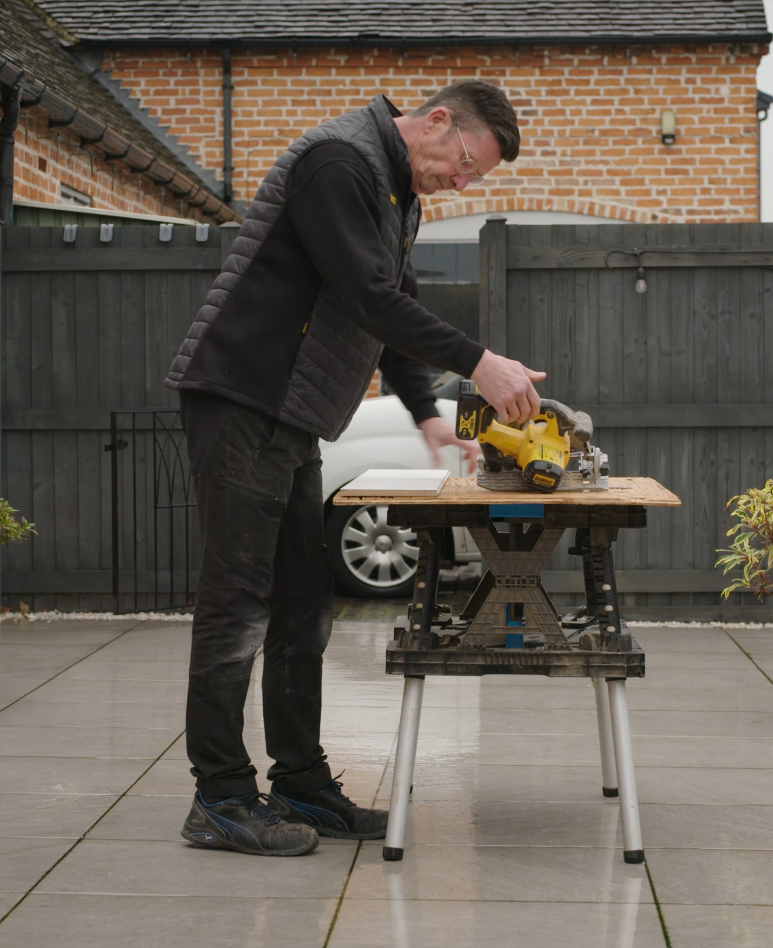
“This could be groundbreaking. If a blood test can find cancer before symptoms, imagine what a difference it could make.”
The Galleri test does not detect a signal for all cancers and not all cancers can be detected in the blood. False-positive and false-negative results do occur. Galleri is a screening test and does not diagnose cancer. Diagnostic testing is needed to confirm cancer. The Galleri test should be used in addition to healthcare provider recommended screening tests.
The overall sensitivity in participants with head and neck cancer in a clinical study was 85.7% (63.2% for stage I, 82.4% stage II, 84.2% stage III, 96.0% stage IV).
Important Safety Information
The Galleri test is recommended for use in adults with an elevated risk for cancer, such as those age 50 or older. The test does not detect all cancers and should be used in addition to routine cancer screening tests recommended by a healthcare provider. The Galleri test is intended to detect cancer signals and predict where in the body the cancer signal is located. Use of the test is not recommended in individuals who are pregnant, 21 years old or younger, or undergoing active cancer treatment. Results should be interpreted by a healthcare provider in the context of medical history, clinical signs and symptoms. A test result of No Cancer Signal Detected does not rule out cancer. A test result of Cancer Signal Detected requires confirmatory diagnostic evaluation by medically established procedures (e.g. imaging) to confirm cancer. If cancer is not confirmed with further testing, it could mean that cancer is not present or testing was insufficient to detect cancer, including due to the cancer being located in a different part of the body. False positive (a cancer signal detected when cancer is not present) and false negative (a cancer signal not detected when cancer is present) test results do occur. Rx only.
Laboratory/test information
The GRAIL clinical laboratory is certified under the Clinical Laboratory Improvement Amendments of 1988 (CLIA) and accredited by the College of American Pathologists. The Galleri test was developed—and its performance characteristics were determined—by GRAIL. The Galleri test has not been cleared or approved by the Food and Drug Administration. The GRAIL clinical laboratory is regulated under CLIA to perform high-complexity testing. The Galleri test is intended for clinical purposes.