

Rich's Story
Lung Cancer
Rich lives in New Jersey with his wife, Staci, their two children, and two dogs. Focused on family and health, they keep up with traditional cancer screenings and routine medical care. With no family history of cancer, he never expected it to become part of his story.
His Galleri Test Experience
Rich first heard about the Galleri test from his brother-in-law and discussed it with his doctor at a routine visit.
“I said ‘Yeah, I’m on board,’” Rich remembered. “I didn’t think too much about it at that point. I just figured it’s going to be negative, but let’s be on the safe side and do the test anyway.” Staci also decided to take the test because she does have a family history of cancer, which increases her risk.
Test Results and Early Detection
Following their blood draws, Staci’s test came back with a “no cancer signal detected” result, while Rich learned that his Galleri test had detected a cancer signal with a predicted origin in the lung.
“My wife and I—the whole family—we were beside ourselves,” Rich said. “There was really nothing in my family history that would lead me to believe that I would get cancer one day. It was really so far in the back of my mind, it just wasn’t an issue.”
“If anybody was gonna test positive, I thought it was going to be me, not him,” Staci said. “My family has a history of cancer. His really doesn’t. So when his came up positive, I was just absolutely shocked.”
Further testing confirmed stage 3B lung cancer that had already spread to his lymph nodes. Rich went on to undergo chemotherapy followed by surgery, and then completed an additional course of chemotherapy with the support of his family.
“If he had been left without this test, it would have been when he developed symptoms that we would have picked it up,” explained Dr. Brian Thomas, his internal medicine physician from MDVIP in New Jersey. “And that almost certainly would have made his prognosis worse and his treatment options more limited.”
Now more than two years after his diagnosis, Rich is grateful for the role Galleri played in his early detection.
Check out Rich’s story on The Cancer SIGNAL Podcast
Watch the episode on YouTube
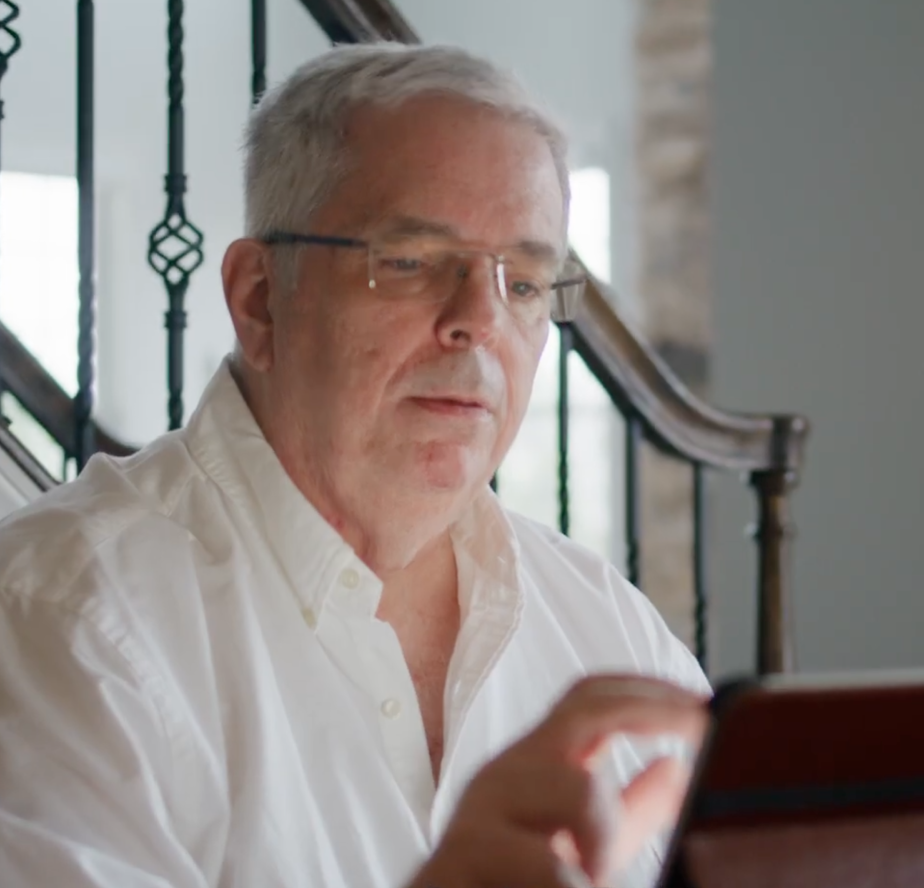
“I could have easily done that and just opted not to take the test, but I would have never known.”
The Galleri test does not detect a signal for all cancers and not all cancers can be detected in the blood. False-positive and false-negative results do occur. Galleri is a screening test and does not diagnose cancer. Diagnostic testing is needed to confirm cancer. The Galleri test should be used in addition to healthcare provider recommended screening tests.
The overall sensitivity in study participants with lung cancer was 74.8% (21.9% for stage I, 79.5% stage II, 90.7% stage III, 95.2% stage IV).
Important Safety Information
The Galleri test is recommended for use in adults with an elevated risk for cancer, such as those age 50 or older. The test does not detect all cancers and should be used in addition to routine cancer screening tests recommended by a healthcare provider. The Galleri test is intended to detect cancer signals and predict where in the body the cancer signal is located. Use of the test is not recommended in individuals who are pregnant, 21 years old or younger, or undergoing active cancer treatment. Results should be interpreted by a healthcare provider in the context of medical history, clinical signs and symptoms. A test result of No Cancer Signal Detected does not rule out cancer. A test result of Cancer Signal Detected requires confirmatory diagnostic evaluation by medically established procedures (e.g. imaging) to confirm cancer. If cancer is not confirmed with further testing, it could mean that cancer is not present or testing was insufficient to detect cancer, including due to the cancer being located in a different part of the body. False positive (a cancer signal detected when cancer is not present) and false negative (a cancer signal not detected when cancer is present) test results do occur. Rx only.
Laboratory/test information
The GRAIL clinical laboratory is certified under the Clinical Laboratory Improvement Amendments of 1988 (CLIA) and accredited by the College of American Pathologists. The Galleri test was developed—and its performance characteristics were determined—by GRAIL. The Galleri test has not been cleared or approved by the Food and Drug Administration. The GRAIL clinical laboratory is regulated under CLIA to perform high-complexity testing. The Galleri test is intended for clinical purposes.